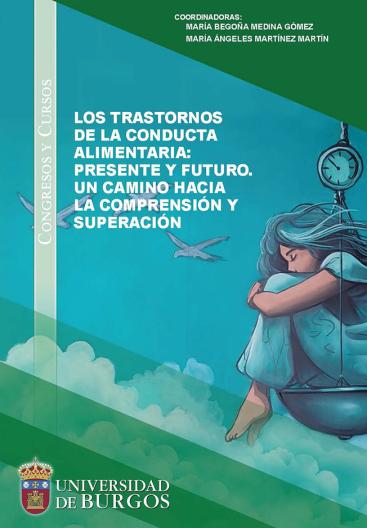
Los trastornos de la conducta alimentaria: presente y futuro. Un camino hacia la comprensión y superación
Keywords:
eating disorders, transdiagnostic approach, mental health, body image, support and accompaniment, family, perfectionistic traitsSynopsis
This book brings together a broad, interdisciplinary, and deeply human perspective on eating disorders, integrating clinical, family, community, and preventive approaches. Throughout thirteen chapters, professionals from different fields explore how eating disorders manifest, are understood, and are accompanied across diverse life and healthcare contexts.
The first four chapters focus on the explanatory and clinical models that allow these disorders to be understood from a current, scientific perspective. The transdiagnostic perspective is presented as a conceptual framework that broadens understanding beyond traditional diagnoses, integrating common processes such as cognitive rigidity, self-imposed pressure and difficulties in emotional regulation. This is complemented by an analysis of perfectionism as a transdiagnostic driver, which is particularly relevant amongst young populations. The meaning-making model then places subjective experience and the construction of meaning at the heart of therapeutic intervention. This section concludes with a clinical case of anorexia nervosa, illustrating the complexity of holistic approach and the need for coordinated, sensitive and sustained interventions over time.
The second section addresses specific situations of vulnerability, illustrating how eating disorders manifest at different stages of life. It analyses the challenges related to body image and eating attitudes in middle-aged women undergoing dietary treatment, as well as the experiences of women living with an eating disorder during the rehabilitation process whilst pregnant and whilst raising their children. These chapters bring visibility to the physical, emotional, and relational challenges arise during these stages, underscoring the importance of specialized support. Taken together, they demonstrate that eating disorders are not exclusive to adolescence and require a broad, flexible approach adapted to each life stage.
Family and the immediate environment take centre stage in the third section, presented as fundamental pillars in the understanding and recovery of eating disorders. It explores the role of the family as a system, forms of therapeutic support, and families' perceptions of Primary Care in managing these disorders. Contributions from associations, community organizations, and professionals working directly with families highlight the importance of social support and networked collaboration. This section also includes the design of a prevention programme, which emphasises the relevance of educational and community-based interventions in reducing risks and promoting healthy habits from an early age.
Finally, the fourth section broadens the focus toward the role of professionals in less visible healthcare settings, such as Primary Care, first-level psychological care, and community pharmacy. It highlights their importance in early detection, ongoing follow-up, clinical support, and coordination with other healthcare resources — essential elements for comprehensive, effective care.
Overall, the book proposes a holistic approach that combines scientific evidence, clinical experience, family perspective, and community action. It encourages readers to understand these disorders as complex phenomena that require clinical sensitivity, interdisciplinary coordination, community involvement and an approach focused on overcoming difficulties and recovery. A work designed to support and guide, useful for professionals, teachers, families and anyone who wishes to better understand — with sensitivity and rigour — the complex world of eating disorders.
Downloads
Abstract 0
Published
Categories
License

This work is licensed under a Creative Commons Attribution-NonCommercial-NoDerivatives 4.0 International License.